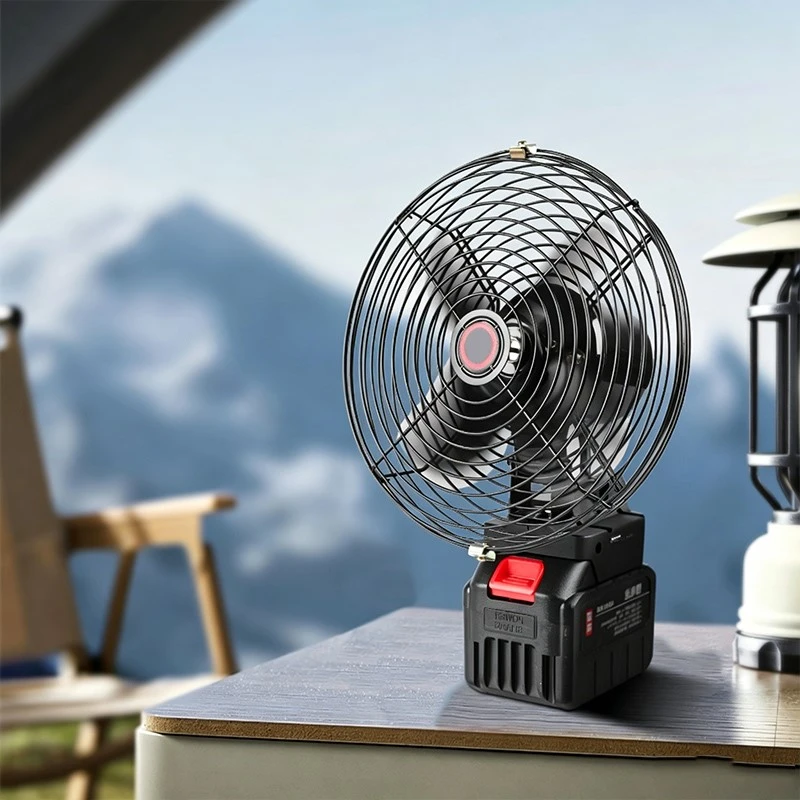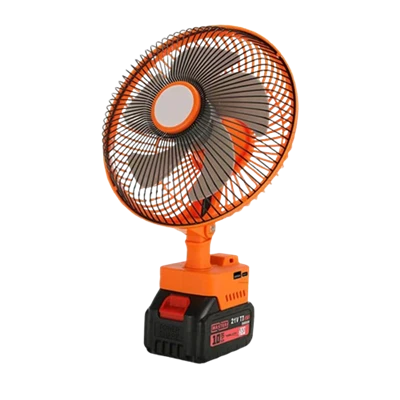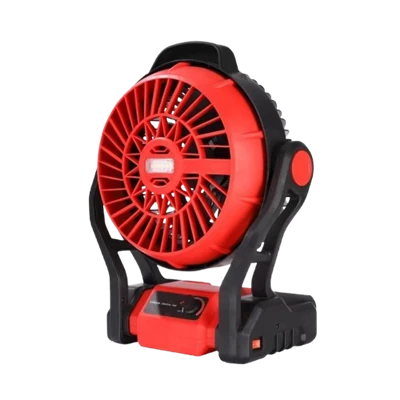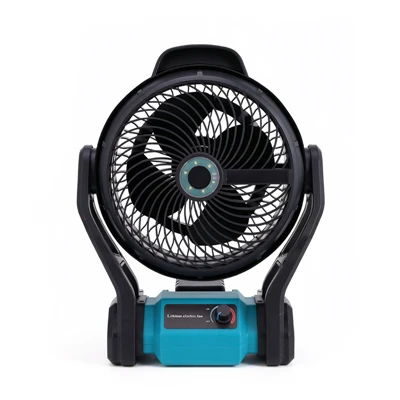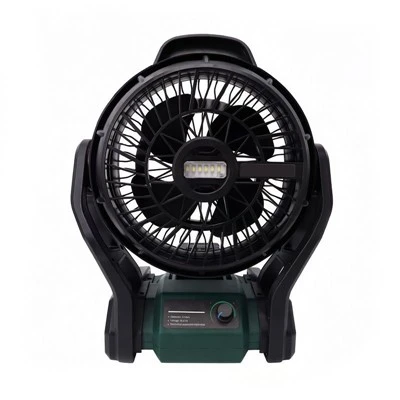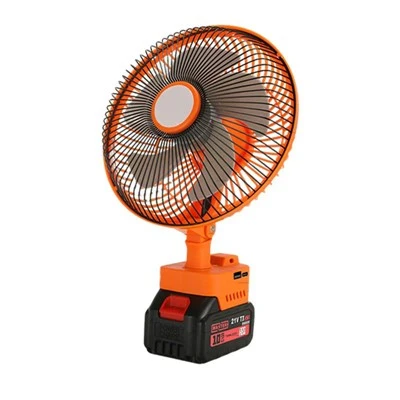

The working principle of a table fan is primarily based on the conversion of electrical energy into mechanical energy, which then drives the fan blades to rotate and cut through the air, generating airflow (wind).
Its basic workflow is as follows: After connecting to AC power, the switch controls the on/off state, the speed regulator adjusts the fan speed, and the motor drives the motor to rotate. The motor drives the fan blades to rotate via a drive shaft, thus generating wind. The motor is the core power source; household fans commonly use single-phase capacitor-driven asynchronous motors, while modern fans increasingly use brushless DC motors. The speed regulator adjusts the fan speed; the rotating fan blades push air to form airflow; the fan guard protects the blades; and the oscillating mechanism expands the airflow range.
The fan converts mechanical energy into the kinetic and potential energy of the air through the rotation of the fan blades, thus creating forced convection to transfer heat to the environment to aid in heat dissipation. Forced convection heat transfer efficiency is far higher than natural convection. Fan performance is mainly affected by factors such as airflow (the total volume of air flowing per unit time), air pressure (the power provided by the fan), fan blade design (such as the number of blades, curvature, and tilt angle), and motor speed.