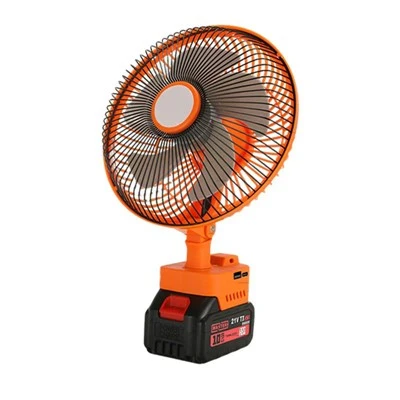

Explosion-proof fans mainly include explosion-proof axial flow fans, explosion-proof centrifugal fans, explosion-proof wall fans, and explosion-proof roof fans. Explosion-proof roof fans are installed on building roofs for ventilation, dust removal, and cooling. Based on their drive and structural form, they can be divided into axial flow roof fans, centrifugal roof fans, and motorless turbine exhaust fans. Axial flow roof fans are suitable for medium-to-low pressure, high-flow applications and can be designed as bidirectional reversible supply and exhaust fans as needed. Centrifugal roof fans are suitable for applications with smaller air volumes but higher pressure requirements. Motorless turbine exhaust fans are energy-saving ventilation devices that use the air difference between indoors and outdoors to drive special arc-shaped blades to rotate along an axis, thereby exhausting indoor air.
Explosion-proof fans come in various specifications and have a wide range of applications. Various types of fans can be selected according to the application environment and different requirements for air volume, pressure, and noise. They are widely used in places with explosive hazards such as coal mines, petroleum, chemical, metallurgical, pharmaceutical, and warehousing industries. Explosion-proof fans typically feature high efficiency and low noise levels. Their design often utilizes multi-objective optimization with CAD software, modifying parameters such as rotational speed, blade angle, and blade profile to improve energy efficiency and reduce noise. Explosion-proof fans operate smoothly and have a long service life. Their impellers undergo dynamic balancing, and bearing temperature rise and vibration speed meet relevant standards. Key components are often made of corrosion-resistant, high-strength materials such as fiberglass. Explosion-proof fans employ an overall explosion-proof design, with explosion-proof motors for their drives. Major components are made of materials that do not generate sparks upon contact, and grounding devices, protective barriers, and other safety measures are implemented to ensure operation in explosive environments. Some models of explosion-proof fans are designed with easy-to-maintain structures and non-stop lubrication systems for convenient maintenance.